
Understanding resistance in senior citizens.
Enjoy this short blog post from the December 2025 issue of Greet Camas Magazine!
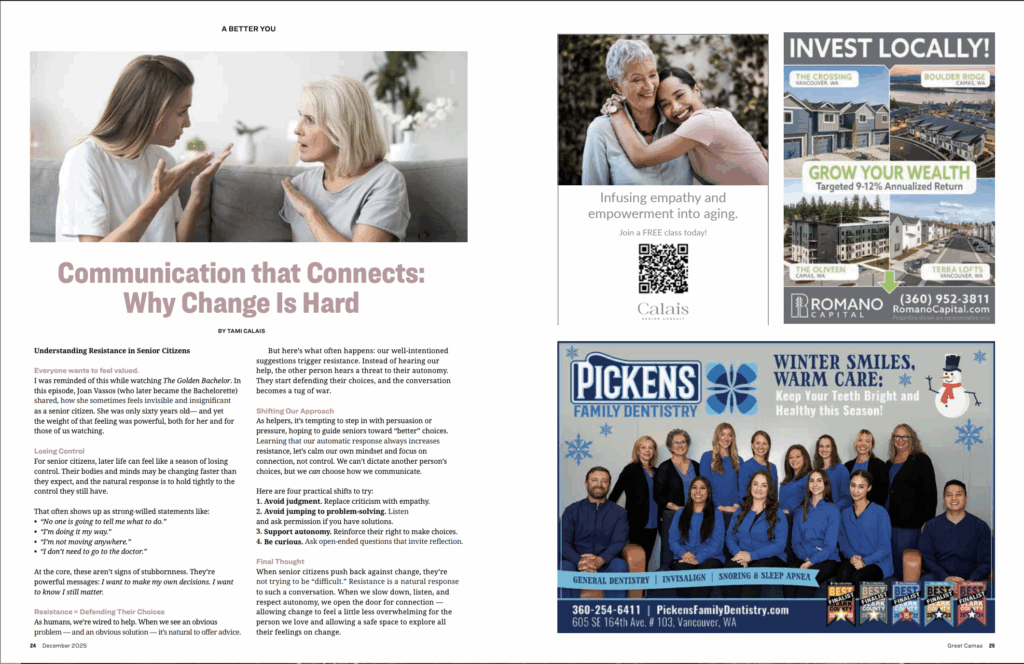
Everyone wants to feel valued.
I was reminded of this while watching The Golden Bachelor. In this episode, Joan Vassos (who later became the Bachelorette) shared, how she sometimes feels invisible and insignificant as a senior citizen. She was only sixty years old— and yet the weight of that feeling was powerful, both for her and for those of us watching.
Losing Control
For senior citizens, later life can feel like a season of losing control. Their bodies and minds may be changing faster than they expect, and the natural response is to hold tightly to the control they still have.
That often shows up as strong-willed statements like:
- “No one is going to tell me what to do.”
- “I’m doing it my way.”
- “I’m not moving anywhere.”
- “I don’t need to go to the doctor.”
At the core, these aren’t signs of stubbornness. They’re powerful messages: I want to make my own decisions. I want to know I still matter.
Resistance = Defending Their Choices
As humans, we’re wired to help. When we see an obvious problem — and an obvious solution — it’s natural to offer advice.
But here’s what often happens: our well-intentioned suggestions trigger resistance. Instead of hearing our help, the other person hears a threat to their autonomy. They start defending their choices, and the conversation becomes a tug of war.
Shifting Our Approach
As helpers, it’s tempting to step in with persuasion or pressure, hoping to guide seniors toward “better” choices. Learning that our automatic response always increases resistance, let’s calm our own mindset and focus on connection, not control. We can’t dictate another person’s choices, but we can choose how we communicate.
Here are four practical shifts to try:
- Avoid judgment. Replace criticism with empathy.
- Avoid jumping to problem-solving. Listen and ask permission if you have solutions.
- Support autonomy. Reinforce their right to make choices.
- Be curious. Ask open-ended questions that invite reflection.
Final Thought
When senior citizens push back against change, they’re not trying to be “difficult.” Resistance is a natural response to such a conversation. When we slow down, listen, and respect autonomy, we open the door for connection — allowing change to feel a little less overwhelming for the person we love and allowing a safe space to explore all their feelings on change.